

💖 Beginner Friendly — Kita Soli (Soli Lent)
A Joyful Introduction for Everyone 🎉🥁
No experience needed — just curiosity, an open heart, and a willingness to try 💛. We move slowly, build confidence step by step, and create a warm, uplifting space where you can shake off the day and reconnect with yourself 🌿✨.
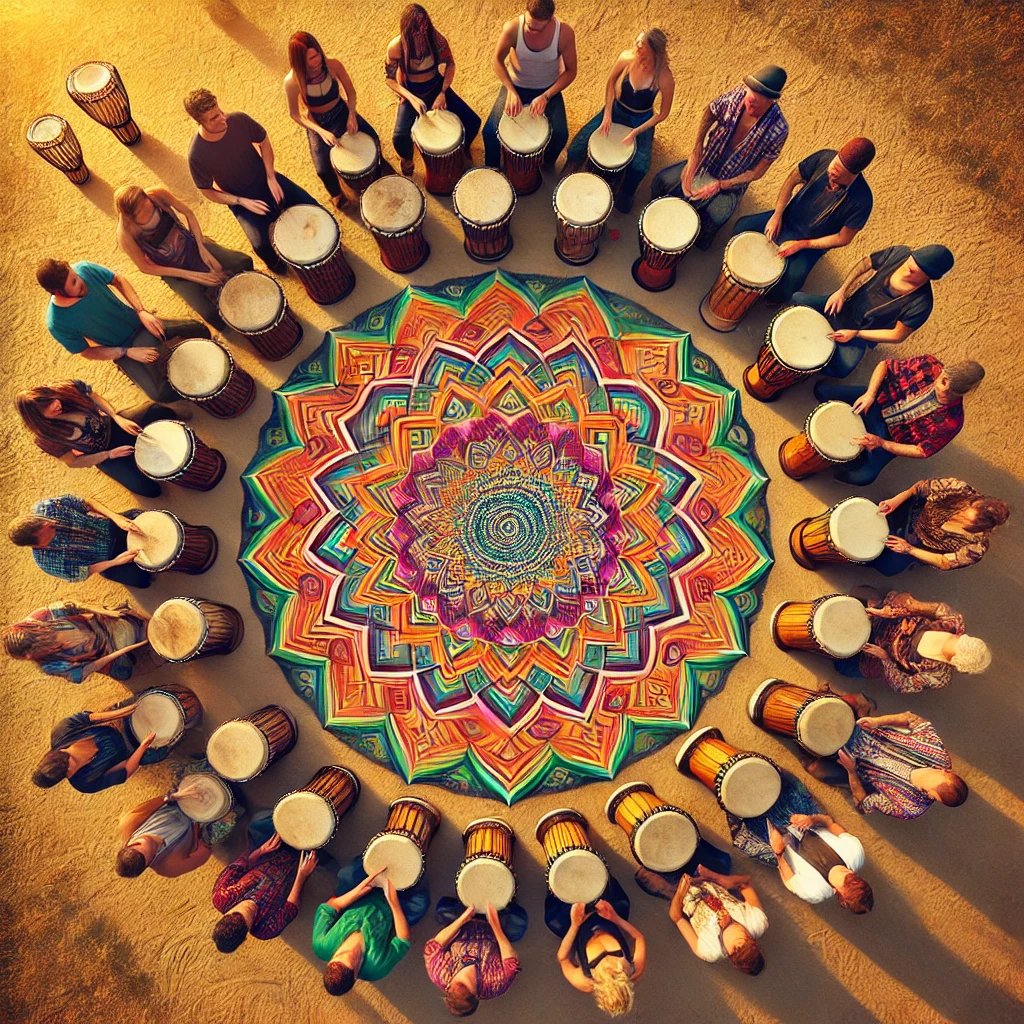
Kita Soli is joyful, steady, and grounding 🌈. It pairs beautifully with most common-time music, making it perfect for drum circles 🌀, open mics 🎤, gigs 🎶, solo play, or just jamming with friends 😄. This rhythm keeps on giving.
As you learn, you’ll grow in:
🧠 Memory
⏱️ Timing
💪 Coordination
🎨 Intuition & creativity
You begin to feel rhythm, discovering how drumming builds presence, focus, and community 🤝💓.
When we drum together, individual rhythms blend into one united groove 🌍✨.
-
🎯 What to Expect
Drumming is built on three essential pillars:
Technique – Mastering the way you strike the drum.
Timing – Keeping steady and precise rhythms.
Tempo – Developing control over speed and groove.
I chose Kita Soli as the foundation of this beginner’s course because it is deeply embedded in the global musical DNA. Whether in rock, hip-hop, pop, jazz, or electronic music, this rhythm transcends genres. Seeing its power, I expanded on this theme, using one of the djembe solo parts to create 18 variations to help students develop on the djembe.
Through playful exploration of these rhythms, we will refine our individual and group understanding of the fundamental concepts of drumming and more.
🌀 Chapter 1: Djembe Foundations, Rudiments & Core Solos — Establishing the Pulse
We begin by building a strong relationship with the djembe itself — physically, rhythmically, and musically.
You’ll learn how to hold, position, and listen to the drum as a tool for connection and expression, while developing clear, relaxed technique. Foundational rudiments focus on bass and tone, strengthening your hands and helping you internalize the downbeat, a defining feature of Kita Soli and all Manding rhythms.
From there, you’ll work through Djembe Solos 1–6, starting simply and progressively adding structure. These early solos emphasize precision, consistency, and grounded timing — laying a stable rhythmic foundation before additional sounds are introduced.
Wellness Focus: Grounding, coordination, internal pulse, relaxed focus
🎨 Chapter 2: Introducing the Slap — Articulation & Expression
With the foundation established, we introduce the slap — the bright, cutting voice of the djembe.
You’ll receive focused technique instruction on bass, tone, and slap, learning how contrast between sounds creates clarity, articulation, and musical energy. Rudiments expand to include the slap sound and sextuplet-based movement, increasing dexterity and rhythmic fluency.
Each of the six core solos is revisited with this expanded sound palette, allowing familiar material to take on new life. What once felt simple now becomes expressive, dynamic, and more rhythmically complete.
Wellness Focus: Confidence, expressiveness, precision without tension
🌍 Chapter 3: The Bass Layer — Depth, Power & Drive
In this chapter, we deepen the groove by fully introducing the bass layer — the grounding force of Kita Soli.
You’ll explore how bass anchors rhythm, adds weight, and transforms your playing, especially when drumming solo or in small groups. Rudiments grow more complex, now asking you to switch fluidly between tone and slap within the same phrase, an important step in developing control and coordination.
The six core solos are expanded once more, this time with added bass movement. These enhancements create a fuller, more dynamic sound, helping your drumming feel stronger, deeper, and more alive.
Wellness Focus: Embodiment, strength with ease, rhythmic vitality
🌱 Course Throughline
Across all three chapters, Kita Soli is approached not as a collection of exercises, but as a living rhythm that grows with you. Each layer builds naturally on the last, encouraging patience, presence, and trust in the process.
By the end of the course, you’ll have:
stronger technique
clearer sound
deeper rhythmic awareness
and a confident, grounded relationship to the drum
🌍 Origin of Kita Soli
Kita is a culturally rich town in western Mali, located in the Kayes Region. It plays a significant role in Mandé musical traditions, which have shaped West African music.
🏛️ Cultural Significance
Famous for its griot traditions and oral storytelling.
A hub for traditional drumming and musical heritage.
🌾 Geography & Economy
Located in a savanna region where farming is central.
Major crops include peanuts, cotton, and millet.
💃 Music & Dance
Traditional drumming is vital in ceremonies, rites of passage, and celebrations.
Rhythms like Kita Soli hold deep cultural significance.
💪 Origin & Meaning
"Soli" rhythms are used in coming-of-age rites for young men.
The Kita region has its own distinct version of this rhythm.
🎼 Musical Characteristics
Time Signature – Typically 4/4
Tempo & Feel – High-energy, driving rhythm for intense dancing.
Djembe & Dundun Parts – Interlocking patterns on Kenkeni, Sangban, and Dununba, with the djembe leading.
This journey is just the beginning! With continued practice, you’ll unlock even greater musical expression, deepening your connection to rhythm, self, and community.
🚀 Let’s embark on this rhythmic adventure together!
-
-
Djembe Foundations
Foundations
Learn the structure and handling of the djembe as a tool for self-expression and connection, setting the stage for rhythmic exploration.
Djembe Rudiments
Explore foundational techniques, including bass and tone hits, which form the basis for complex rhythms.
Foundations
Learn the structure and handling of the djembe as a tool for self-expression and connection, setting the stage for rhythmic exploration.
Djembe Rudiments
Explore foundational techniques, including bass and tone hits, which form the basis for complex rhythms.
-
Djembe Solo 1-6 Fundamentals
Fundamentals
Strengthen confidence, precision, and rhythmic understanding with step-by-step guidance and downloadable videos. You’ll internalize the downbeat, refine bass and tone, and master 4/4 timing, essential for jam sessions and drum circles. These six rhythms lay the groundwork for twelve advanced variations, helping you create expressive, complex patterns. This structured approach ensures steady progression, allowing you to build a versatile and adaptable drumming technique.
Fundamentals
Strengthen confidence, precision, and rhythmic understanding with step-by-step guidance and downloadable videos. You’ll internalize the downbeat, refine bass and tone, and master 4/4 timing, essential for jam sessions and drum circles. These six rhythms lay the groundwork for twelve advanced variations, helping you create expressive, complex patterns. This structured approach ensures steady progression, allowing you to build a versatile and adaptable drumming technique.
-
-
-
Introducing the Slap Sound
In-Depth Technique
Learn all about bass, tone, and slap, the core djembe sounds. The slap’s sharp, high-pitched stroke contrasts with the deeper bass and mid-range tone, adding clarity, articulation, and dynamic expression for more vibrant rhythms.
Djembe Rudiments
Expanding on our rudiments by introducing the slap sound and sextuplets, essential for refining technique and expanding rhythmic versatility.
In-Depth Technique
Learn all about bass, tone, and slap, the core djembe sounds. The slap’s sharp, high-pitched stroke contrasts with the deeper bass and mid-range tone, adding clarity, articulation, and dynamic expression for more vibrant rhythms.
Djembe Rudiments
Expanding on our rudiments by introducing the slap sound and sextuplets, essential for refining technique and expanding rhythmic versatility.
-
Djembe Solo 1-6 Articulation
Articulation
We expand on Chapter 1 by incorporating the slap sound, adding sharper contrast and definition to your rhythms. Proper hand placement refines bass, tone, and slap, strengthening your rhythmic foundation. Intonation is key—clarity matters more than speed. Through patience and repetition, these techniques become second nature. As you refine these sounds, your drumming gains expression and fluidity, unlocking greater control, musicality, and dynamic rhythmic potential.
Articulation
We expand on Chapter 1 by incorporating the slap sound, adding sharper contrast and definition to your rhythms. Proper hand placement refines bass, tone, and slap, strengthening your rhythmic foundation. Intonation is key—clarity matters more than speed. Through patience and repetition, these techniques become second nature. As you refine these sounds, your drumming gains expression and fluidity, unlocking greater control, musicality, and dynamic rhythmic potential.
-
-
-
Introducing the Bass Layer
No Bass, No Party
This brief intro showcases the bass layer’s role in filling out rhythms, adding depth and groove, especially in solo or small-group settings. It sets the stage for a fuller, more dynamic sound.
Djembe Rudiments
Building on previous exercises, we introduce greater complexity by switching between tone and slap within the same phrase, a key step in refining precision and control.
No Bass, No Party
This brief intro showcases the bass layer’s role in filling out rhythms, adding depth and groove, especially in solo or small-group settings. It sets the stage for a fuller, more dynamic sound.
Djembe Rudiments
Building on previous exercises, we introduce greater complexity by switching between tone and slap within the same phrase, a key step in refining precision and control.
-
Djembe Solo 1-6 dynamism
Dynamism
We build on previous lessons by adding extra bass strikes, enhancing groove and depth. This is especially useful in solo or small-group playing, providing drive and fullness. At first, the added bass may feel complex, but with coordination and breath awareness, it will become fluid. Refining how you layer bass with tone and slap creates a richer, more expressive sound, making your drumming more powerful, dynamic, and resonant.
Dynamism
We build on previous lessons by adding extra bass strikes, enhancing groove and depth. This is especially useful in solo or small-group playing, providing drive and fullness. At first, the added bass may feel complex, but with coordination and breath awareness, it will become fluid. Refining how you layer bass with tone and slap creates a richer, more expressive sound, making your drumming more powerful, dynamic, and resonant.
-